

The Problem With “Natural” Products
How to notice when a single word is replacing evidence without you noticing.

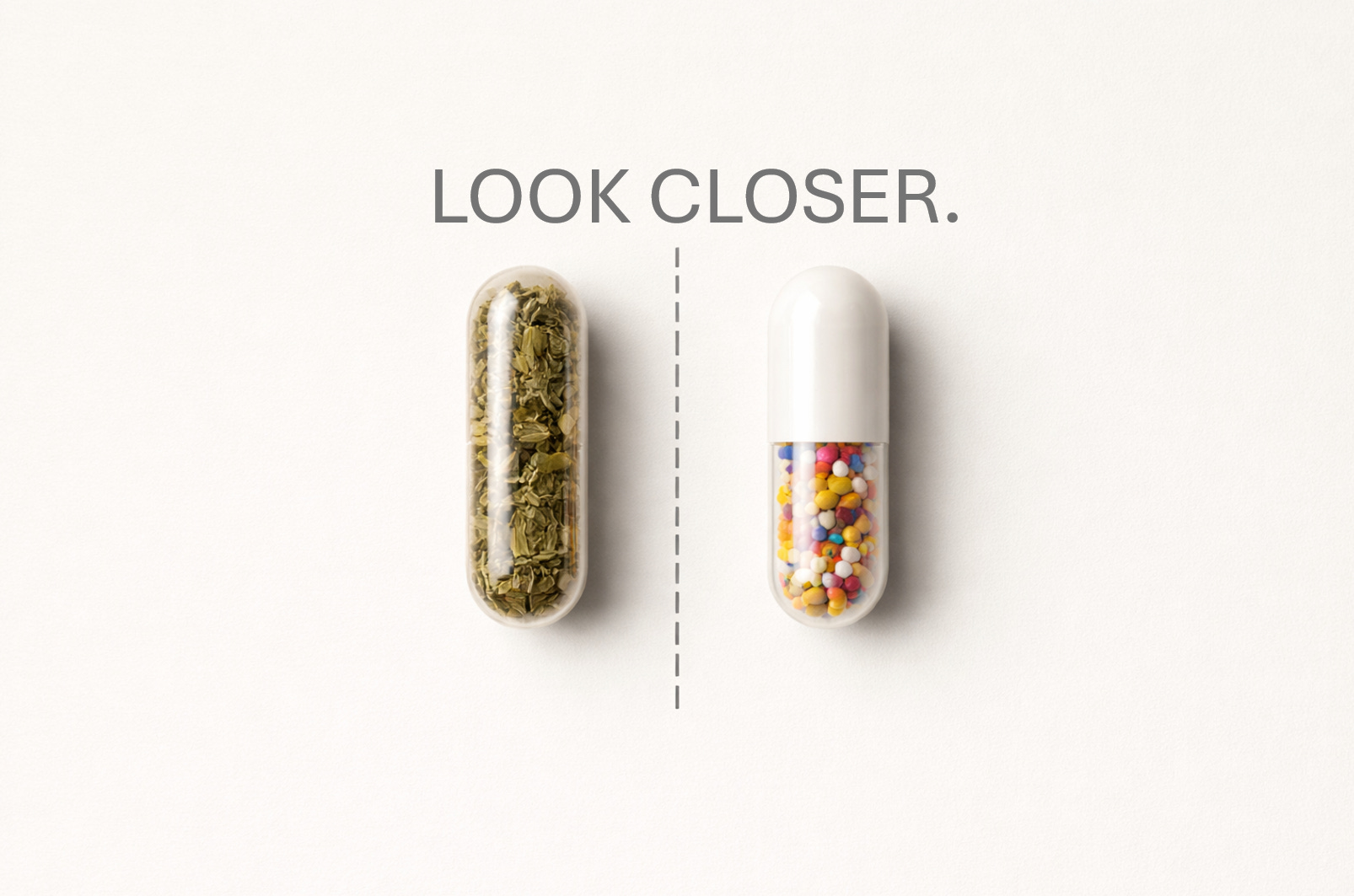
There is a class of words that show up again and again in health, food, and wellness conversations that perform a very specific job in the background of our thinking.
These words do not explain how something works. I think of them as placeholder words.
“Natural” is the most successful example.
When people encounter the word on a label or in advice, it rarely registers as a neutral descriptor. It functions as a conclusion. The brain treats it as an answer to questions that were never explicitly asked: Is this safe? Effective? Is this aligned with what our bodies are supposed to want?
This gets all of us (including me). This is not a story about gullibility or ignorance. It is a story about how language can be used to resolve ambiguity without providing meaningful information. We will examine “natural” in this letter, but many words can have this “placeholder” effect in many contexts: playing upon your assumptions to give the feeling of information without providing any substance.
What “natural” does especially well is compress complexity into confidence. It collapses a set of real, consequential variables into a single (reassuring) signal. The moment the word appears, attention shifts away from the kinds of details that actually govern outcomes and toward a feeling that the product or idea has passed some ancient safety check.
Those missing details tend to be inconvenient for marketers. Consider something as ordinary as an over-the-counter nutraceutical: questions about drug interactions, who benefits, who doesn’t, and under what conditions rarely get answered by origin alone.
You can see how little actual information “natural” carries by looking at how weakly it is defined in practice.
The FDA has articulated a narrow policy around the term, stating that it generally considers “natural” to mean that nothing artificial or synthetic has been added to a food that would not normally be expected to be there. The guidance stops there. It does not address how the food was produced, including pesticide use. It does not address processing or manufacturing methods. It does not speak to dose, purity, or biological effect. And most importantly, it does not imply any nutritional or health benefit (or lack of risk).
This position functions more as regulatory guidance rather than a rule, leaving wide latitude in how the term is applied and interpreted.
That ambiguity has left courts, consumer advocates, and companies arguing for years over what consumers are entitled to expect when they see the word on a package.
That ambiguity is what makes the word commercially useful.
Over the past two decades, consumer protection groups have repeatedly challenged companies for marketing foods and personal-care products as “natural” despite the presence of ingredients most consumers would never intuitively classify that way. One of the most visible examples involved General Mills, which eventually agreed to remove “100% natural” from Nature Valley products after prolonged litigation over ingredients like maltodextrin and processed syrups. To be clear - the issue in those cases was not that the ingredients were harmful. The question at hand was whether consumers were being misled.
The Federal Trade Commission has taken a similar stance in personal-care advertising, warning companies that unqualified “all natural” claims can mislead consumers when synthetic compounds are present, even if those compounds are well-studied and safe.
Examples from biology make the same point with more concision than any argument in the courts.
Strychnine is a naturally occurring compound isolated from the seeds of plants in the Strychnos genus, native to parts of India and Southeast Asia. In the nineteenth century it occupied a strange place at the boundary between medicine and rat poison. Physicians prescribed it in small doses as a stimulant for fatigue, indigestion, and even paralysis. It appeared in patent medicines and tonics sold to the public, often under the promise of restoring vitality or “strengthening the nerves.” Its plant origin and dramatic effects made it feel potent and legitimate.
The problem was the margin for error. Strychnine acts by blocking inhibitory neurotransmitters in the spinal cord and brainstem, removing the body’s ability to dampen muscle contractions. At slightly higher doses than those marketed as ‘therapeutic’, it produces violent, sustained muscle spasms, seizures, and death by respiratory failure. There is no gradual slope from helpful to harmful. The transition is abrupt. Historically, that narrow therapeutic window is why strychnine also became infamous as a rodent poison and, later, a murder weapon, most notably in several high-profile Victorian poisoning cases that helped push toxicology toward more formal forensic science.
In the world of medicines, naturally derived versions of therapies are sometimes less effective than “engineered” pharmaceuticals.
Insulin analogs used by millions of patients with diabetes today are engineered molecules that do not exist outside of human design. They were modified deliberately to behave in predictable ways inside the body, dissolving or persisting at specific rates to better support blood sugar control compared to “plain” human insulin alone.
Origin alone tells you almost nothing about how either behaves in practice. Control, precision, and context are what matter. Yet, the word “natural” has a way of redirecting attention away from those factors and toward a feeling of inherent appropriateness.
There is one interesting tension that arose in my research in preparation for writing this letter - our preference for “natural” changes based on the stakes.
In low-stakes settings, everyday food choices, supplements, skincare, lifestyle tweaks, the symbolic comfort of “natural” carries real weight. These are domains where outcomes feel gradual, reversible, and personal. If something feels gentler, more familiar, or closer to how we imagine humans once lived (or should live), that intuition often feels like a reasonable guide. The cost of being wrong seems modest, and the upside of choosing “something wholesome” feels self-evident.
That calculus changes as the stakes rise and consequences become immediate.
In high-stakes settings like surgery or life-threatening disease, “natural” falls down our priority list. Instead, reliability, predictability, and measurable effect take precedence. No one pauses before surgery to ask whether the anesthetic is natural. What matters is that it works the same way every time and is delivered in a sterile vial with known effects and risks. The last thing you want as you’re wheeled into the operating room is someone improvising with hand-picked, dried plants and a stone grinder.
Now, the broader pattern comes into focus. Certain words function less as descriptors and more as cognitive placeholders. They allow a claim to feel complete without being complete. They resolve uncertainty emotionally while leaving the empirical questions unanswered.
That is the pattern worth learning to recognize.
When you encounter a placeholder word like “natural,” the useful move is to take a moment to explore your curiosity about what information the word is standing in for. What would you want to know if the label were stripped away? What is being replaced? What assumptions did the word encourage you to make?
This applies just as much to “natural” peanut butter as it does to supplements, skincare, or medical advice. Anywhere language steps in to do interpretive work on your behalf.
Marketing flourishes in the gap between feeling informed and being informed.
The skill is learning to notice when a symbol is being asked to carry the weight of evidence.
A quick note to thank my Paid subscribers. Paid subscriptions allow me to keep this work independent, deeply researched, and free from sponsor influence. They fund research time, fact-checking, and the slower thinking that doesn’t always survive on social platforms. If you’ve found value in this newsletter, a paid subscription is the most direct way to strengthen my work here and elsewhere.
Best, Morgan
Morgan McSweeney, PhD (@dr.noc)
As usual, your argument is spot on, naturally!
Nicely articulated. Thanks for sharing. I think similar things could be said about "organic.". It turns out that organic does not mean free of pesticides.